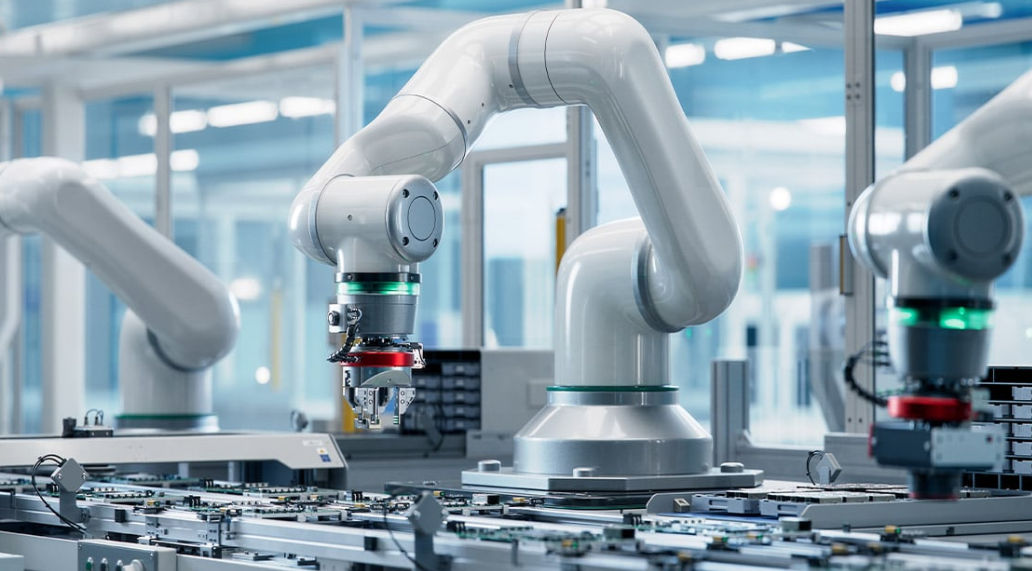
Robotics are boosting shop-floor throughput and consistency by handling repetitive tasks to tight tolerances and enabling traceable quality data. Collaborative robots shift workflows and safety considerations, requiring governance and up-to-date risk controls. A cohesive tech stack—from sensors to AI—provides real-time visibility and predictive maintenance, enabling proactive interventions. Scaled, modular deployments with standardized interfaces turn pilots into sustained value, aligning investments with performance targets and competitive advantage—yet the path from pilot to scale hinges on measurable governance and data-driven prioritization.
What Robotics Bring to the Shop Floor Today
Robotics have transformed the shop floor by increasing throughput, improving consistency, and reducing human error across core manufacturing tasks.
The current landscape shows autonomous cells handling repetitive operations with tight tolerances, enabling higher output and traceable quality.
Quality control data is continuously gathered, enabling real-time defect detection.
Predictive maintenance reduces unexpected downtime, sustaining line velocity and enabling strategic investment in flexible, data-driven production capabilities.
How Collaborative Robots Reshape Workflows and Safety
Collaborative robots, or cobots, are reshaping workflows by weaving human-robot collaboration into daily production without sacrificing speed or precision.
The analysis notes efficiency gains alongside collaboration pitfalls, as task share shifts require clear governance and standardized handoffs.
Safety protocols evolve with real-time monitoring, yet ethical considerations emerge around job displacement, data ownership, and transparent decision-making in automated processes.
From Sensors to AI: the Tech Stack Driving Quality and Uptime
From sensors to AI, the tech stack underpinning quality and uptime combines edge instrumentation with advanced analytics to convert raw measurements into actionable insight.
Sensor integration enables real-time visibility across assets, while predictive maintenance translates data into proactive interventions.
The approach reduces downtime, strengthens throughput, and informs investment priorities, aligning operations with performance targets and freedom to optimize processes without sacrificing reliability.
Implementing Robotics at Scale: Strategy, Metrics, and ROI
How can manufacturers scale robotic deployments to maximize throughput while maintaining reliability and safety? Scaled adoption hinges on a clear governance model, modular automation, and standardized interfaces that reduce integration friction. Strategic funding informs phased investments, while ROI measurement tracks operational uplift, cycle-time reductions, and yield gains. Data-driven prioritization aligns pilots with high-impact processes, accelerating value realization and sustaining competitive advantage.
Frequently Asked Questions
What Are the Hidden Costs of Robot Maintenance Over Time?
Hidden costs accumulate over the maintenance lifecycle, including infrastructure integration and system upgrades, as robots require periodic recalibration and component replacement. The analysis notes predictive analytics as a mitigation tool, guiding investment while preserving freedom in operational reliability.
How Do Robots Impact Job Satisfaction and Morale?
The answer alludes to a changing chorus: robots influence job satisfaction and morale impact through task clarity, workload balance, and perceived autonomy. Data suggest modest gains in engagement when roles are well-defined and workers collaborate with automation.
Can Robotics Solutions Be Customized for Small-Batch Production?
Yes, robotics solutions can be customized for small-batch production. Customizable automation enables agile tooling and rapid changeovers, aligning with small batch factories’ needs while preserving efficiency, quality, and data-driven insights across varied product SKUs and volumes.
What Are the Data Privacy and Cybersecurity Risks?
Suspense builds as data flows: the answer highlights privacy risks and cybersecurity threats inherent in automation. The analysis notes exposure from connected devices, weak access controls, and supplier vulnerabilities, stressing governance, continuous monitoring, encryption, and rapid incident response.
How Is Workforce Retraining Funded and Sustained Long-Term?
Funding models for workforce retraining combine public subsidies, industry contributions, and private alongside amortized corporate investments, enabling sustained programs. Data-driven analyses indicate ongoing partnerships and outcomes tracking support scalability, adaptability, and perceived value, aligning with an industry-focused, freedom-oriented training ecosystem.
Conclusion
Robotics integrate sensors, autonomy, and AI to deliver measurable uptime and consistent quality, turning data into actionable improvement. Cobots expand human-robot collaboration while preserving safety and governance as tasks evolve. Scalable, modular deployments with standardized interfaces enable rapid pilots to become enduring value, guided by data-driven metrics and ROI. The result is a cohesive factory ecosystem, like a well-tunneled engine where each part synchronizes to optimize throughput and traceable outcomes.